Why Smart Children Sometimes Hate Reading
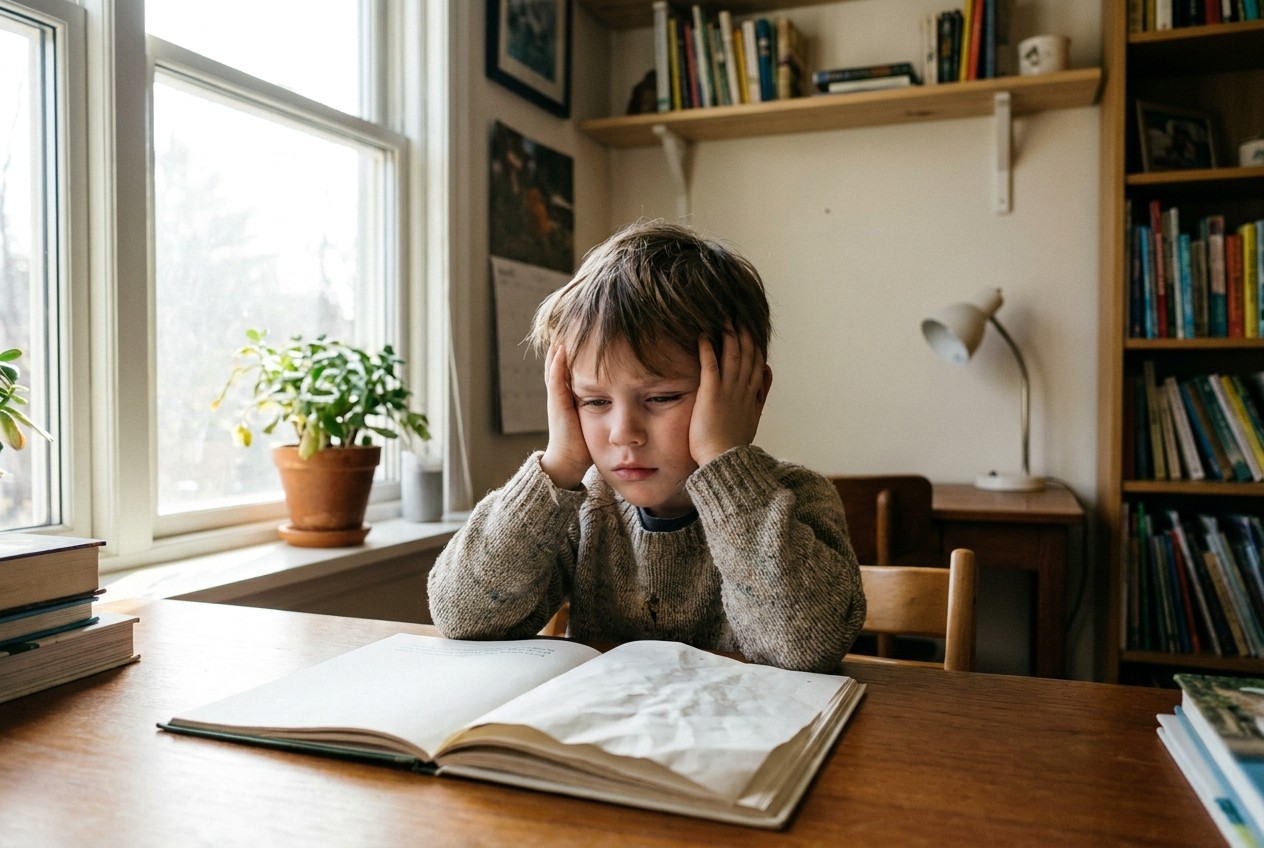
When a bright child avoids books, the explanation is usually physical, not motivational. Here's how vision problems drive reading avoidance — and what to do about it.
Parents describe it in a few ways. "She's so smart, but she hates reading." "He'll happily explain the plot of every movie he's watched but can't get through two pages of a book." "She does anything to avoid sitting down with text."
What parents are usually searching for is a character explanation. Maybe the child is lazy. Maybe they need a more engaging book. But reading avoidance in otherwise capable children is more often a physical problem than a character one. When reading is genuinely uncomfortable — even mildly, even in ways the child can't articulate — the brain learns to avoid it. That's not laziness. It's a reasonable response to sustained discomfort.
What "uncomfortable" actually means
Children with untreated convergence insufficiency, eye tracking problems, or accommodative dysfunction rarely say "my eyes are struggling." They don't have the vocabulary for what they're experiencing, and most don't realize it's abnormal. What they say instead: "I'm tired." "It's boring." "My head hurts." "I can't concentrate." Sometimes they don't say anything — they just fidget, look around, or get up.
What's happening is this: the muscles controlling eye coordination are working constantly to keep a stable, single image on the page. When those muscles can't do the job efficiently, they fatigue. Fatigue in the visual system feels like general tiredness, mild headache, or the vague sense that something is wrong without being able to say what. Children translate this into the nearest available word: boredom.
The pattern worth paying attention to
The most reliable sign is a gap between what a child does well and what happens with sustained text. A child with an undetected vision problem will often listen attentively and remember what they heard; engage enthusiastically in class discussions; build complex things and grasp abstract ideas; read aloud acceptably when it's brief and someone is watching; but fall apart during sustained independent reading.
That gap — between verbal ability and reading stamina — is the specific pattern that warrants a functional vision assessment. It's not a reading problem. It's a visual endurance problem. The analogy that lands with most parents: if a child had a small stone in their shoe, they'd walk, but they wouldn't want to walk far. Remove the stone, and the walking changes. Vision therapy removes the stone.
What the research shows
Studies on convergence insufficiency consistently show that treated children read for longer periods, read faster, and report significantly less discomfort than untreated children. A 2009 randomized trial published in the Archives of Ophthalmology found that children who completed vision therapy for convergence insufficiency improved their reading fluency scores significantly — not because they learned new reading skills, but because reading stopped fighting their own visual system.
Specific signs at home
Signs that physical discomfort rather than attitude may be behind reading avoidance: the child who reads for five minutes and then "gets tired" but can watch a show for an hour; the child whose comprehension is strong when you read aloud to them but collapses when they read independently; the child who briefly covers one eye while reading; the child who says "the words move" or "letters jump around" and then quickly backtracks when you react with surprise.
At Toronto Vision Therapy & Optometry in North York, we regularly assess children who struggle with reading, including many found to have treatable vision conditions that were making reading uncomfortable. Book an appointment at tvto.ca/booking or call us at 416-498-3438.




Have questions about your child's vision?
Book a comprehensive eye exam or vision therapy consultation at our North York clinic.