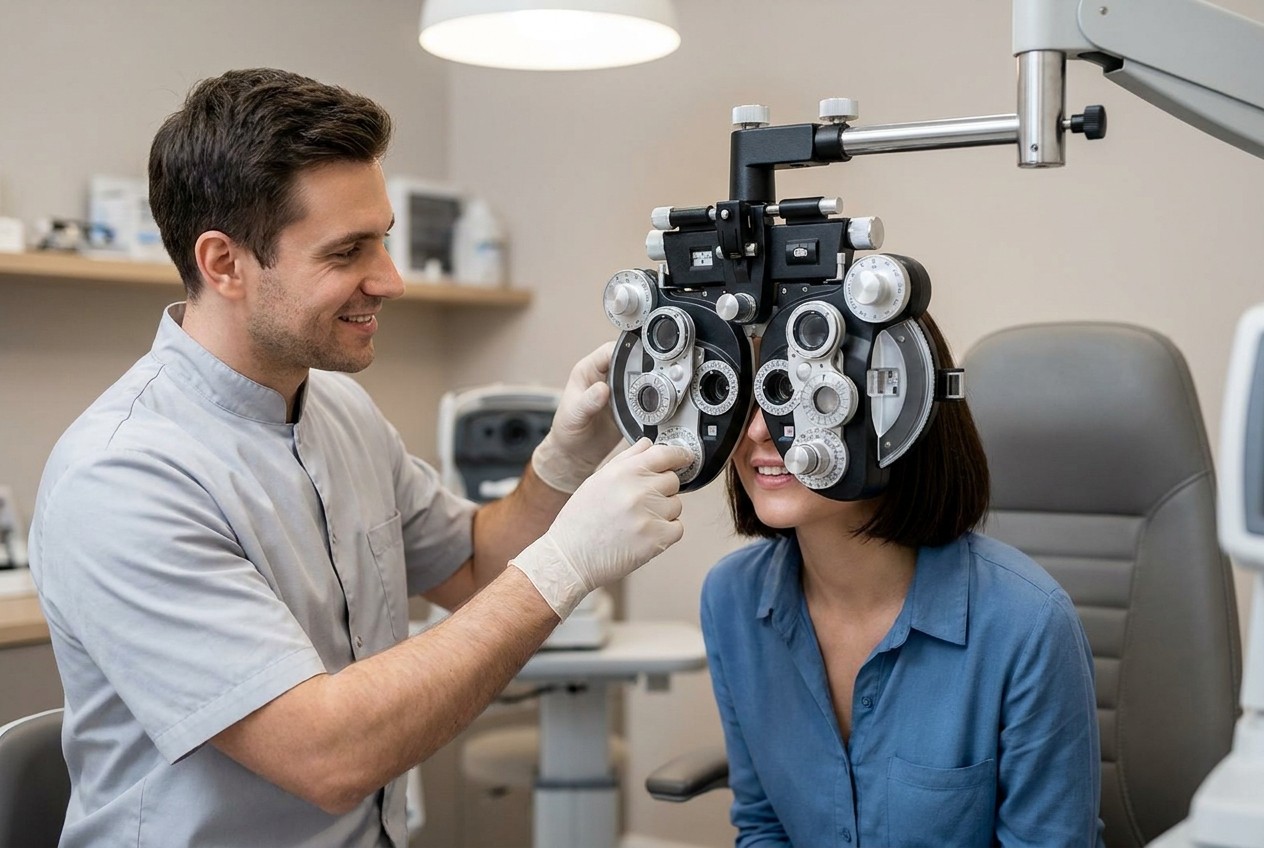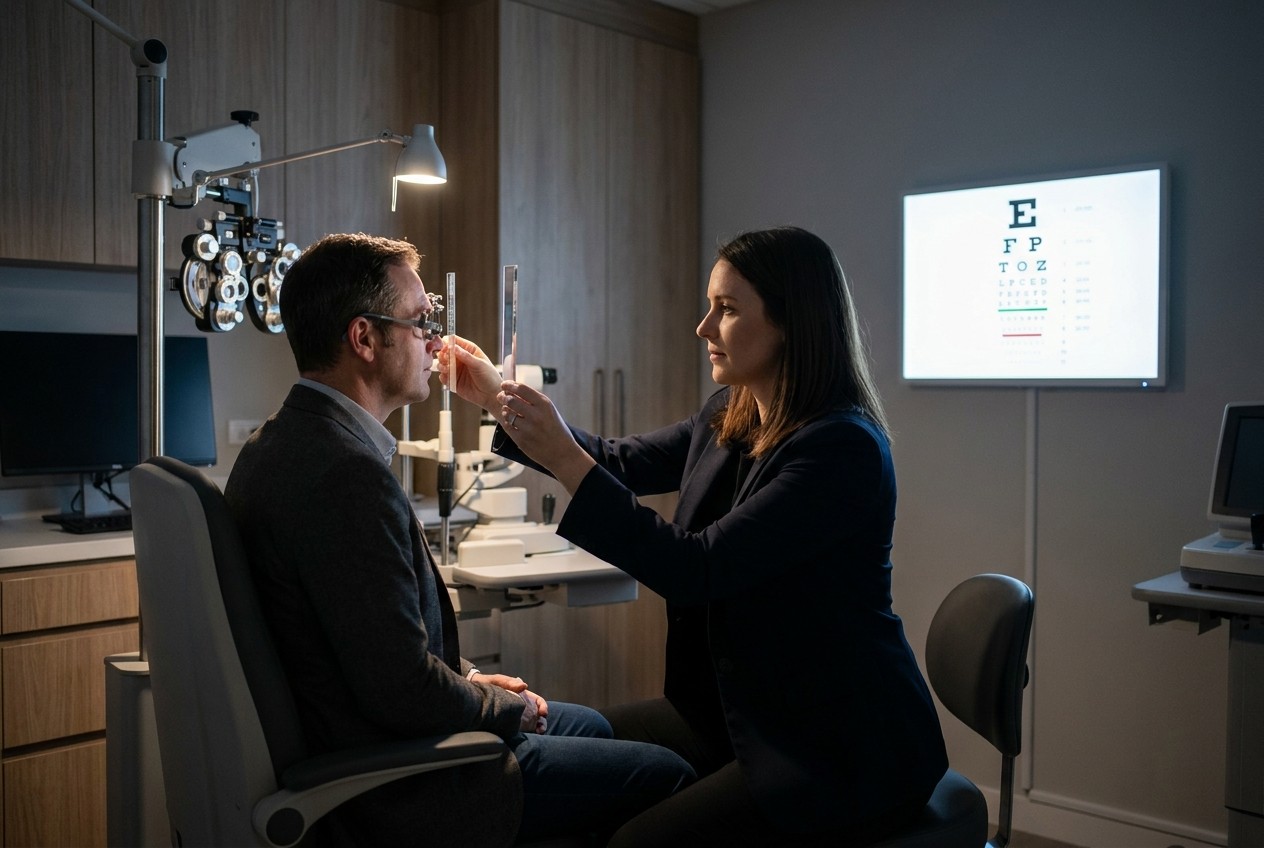
What does improvement actually look like after vision therapy? Here's a look at the conditions we treat most often at TVTO and what patients and families typically experience through treatment.
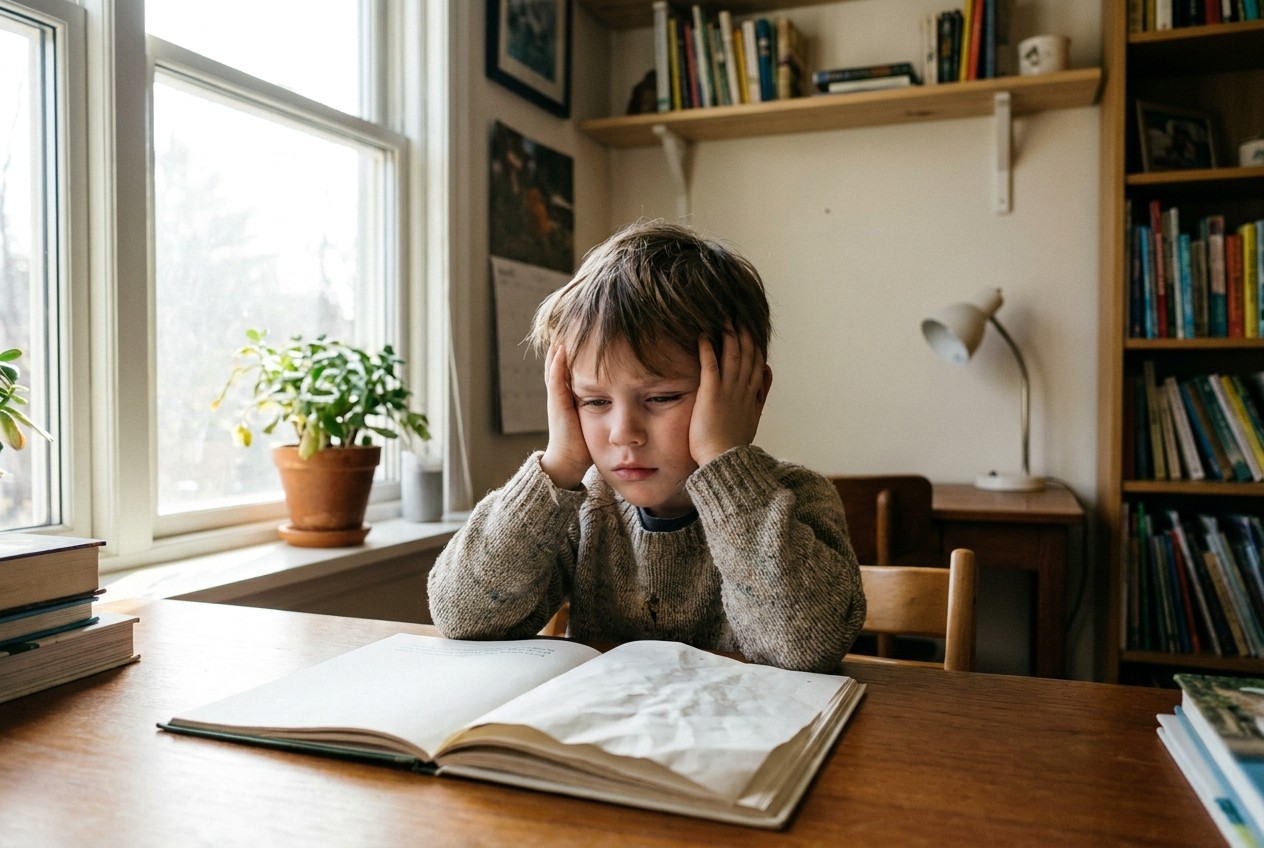
Vision therapy is most convincing when it's described from the inside. Not as a clinical protocol for binocular vision dysfunction, but as what it looks like for a nine-year-old who went from dreading reading to reading for fun, or an adult who stopped having daily headaches six weeks into treatment.
Here are the conditions we treat most often at Toronto Vision Therapy & Optometry in North York, and what patients and families typically experience through the process.
This is the most common condition we see and the one with the strongest evidence base. Children with convergence insufficiency can't sustain inward eye focus for near work. Reading becomes exhausting within minutes. Headaches after school are routine. The pattern of improvement we see most often: reading time increases within the first month, headaches ease significantly by weeks five or six, and by the end of treatment the child is reading voluntarily — often for the first time parents can recall.
The 2008 NIH-funded Convergence Insufficiency Treatment Trial found that 73% of children who completed in-office vision therapy achieved clinical resolution of their symptoms.
Adults often come to us after years of managing symptoms they didn't realize had a visual cause: daily headaches, dizziness, discomfort in busy environments, difficulty staying focused during long reading sessions. The pattern we see frequently: symptoms developed gradually, possibly worsened over years of computer-heavy work, and were attributed to stress. A comprehensive assessment reveals a fusional vergence problem. Treatment — often a combination of prism correction and vision therapy — produces noticeable improvement within weeks.
Concussion disrupts the neural pathways that control eye coordination, tracking, and focus. Many patients continue experiencing visual symptoms long after the acute injury: light sensitivity, difficulty reading for more than a few minutes, headaches triggered by screens, dizziness when moving through busy spaces. Neuro-optometric rehabilitation — vision therapy adapted for post-concussion recovery — is a well-supported treatment for these symptoms, and improvements in reading tolerance, screen tolerance, and daily function are typically meaningful and lasting.
Traditional treatment uses patching of the stronger eye. Vision therapy adds active treatment that trains both eyes to work together, rather than just depriving the stronger eye passively. Research shows that active vision therapy produces better long-term outcomes for binocularity than patching alone.
Children with poor eye tracking are often misidentified as slow readers or inattentive students. After treatment targeting saccadic accuracy and fluency, reading speed typically increases measurably within the first two months. Teachers notice the change. Parents notice the finger-tracking habit has stopped.
If any of the patterns above are familiar — for yourself or your child — a neuro-visual evaluation will give you a clear answer. We don't diagnose over the phone or from a list of symptoms. But the assessment tells you precisely what's happening visually and whether vision therapy is likely to help. Book an appointment at tvto.ca or call us at 416-498-3438.



Book a comprehensive eye exam or vision therapy consultation at our North York clinic.