
Vision Therapy in North York, Toronto
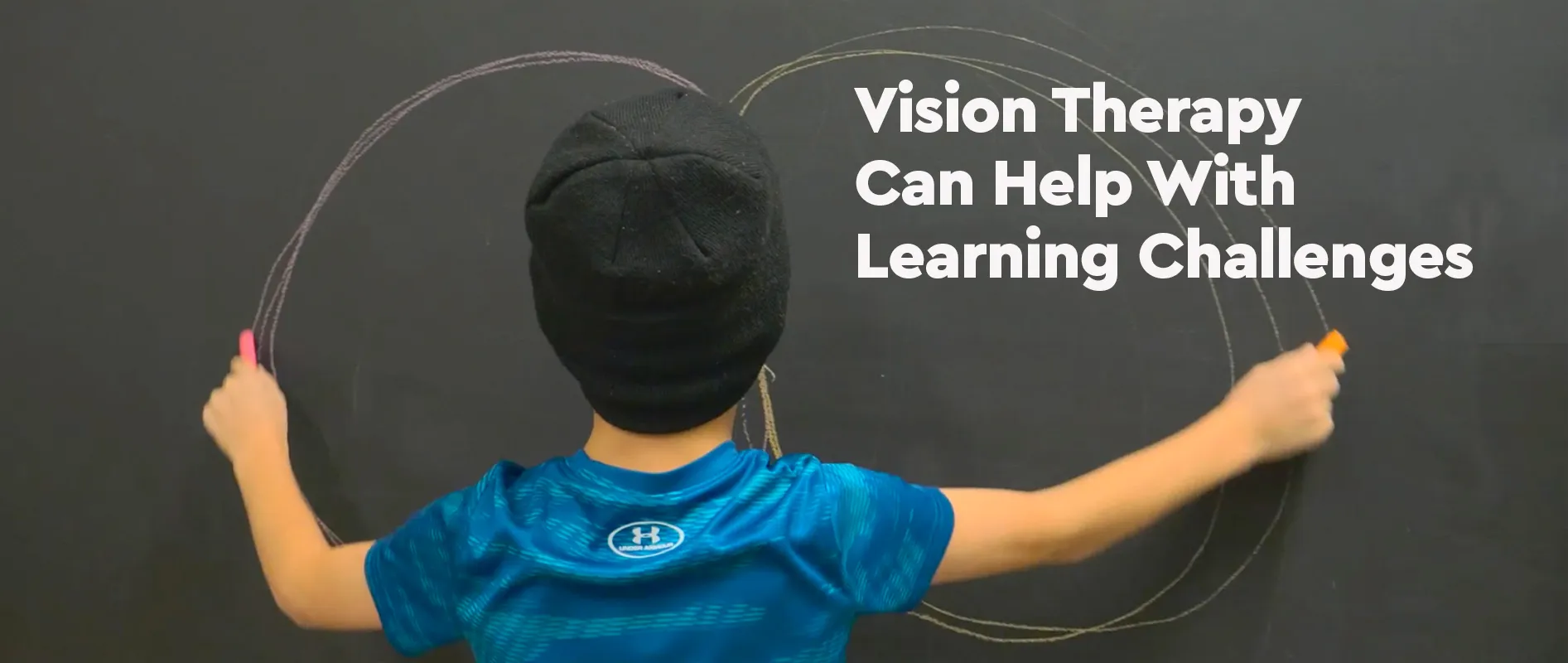

Retraining Vision with Care and Expertise
We provide personalized Vision Therapy programs designed to strengthen the connection between the eyes and brain. Our approach blends science, compassion, and training to help patients of all ages to reduce headaches, read comfortably and efficiently, achieve clearer, more comfortable vision.
Families trust our specialists to deliver effective, life-changing vision therapy.¹ Through customized exercises and one-on-one guidance, we help patients overcome visual challenges like lazy eye, crossed eyes, reading difficulties, and post-concussion vision issues.
Hear From Dr. Eryou
Dr. April Eryou explains what Vision Therapy is and how it can help.
What You Need to Know About Vision Therapy
Children with reading difficulties, lazy eye, or learning-related vision problems.
Post-concussion vision rehabilitation for headaches, double vision, and light sensitivity.
One-on-one in-office sessions with home exercise programs guided by our therapists.
Most programs run 6–18 months with measurable progress checkpoints every 8 weeks.
Begins with a functional vision evaluation — no referral needed.
Sources
¹ Convergence Insufficiency Treatment Trial (CITT) Study Group. Archives of Ophthalmology, 2008 — a National Eye Institute–funded randomized clinical trial found that 73% of children achieved full or improved symptom resolution after 12 weeks of office-based vision therapy. ClinicalTrials.gov NCT00338611
Our Vision Therapy Solutions


Vision Therapy: Common Questions
Is vision therapy right for us?
How do I know if my child needs vision therapy?
Common signs include avoiding reading or homework, losing their place while reading, headaches or eye strain during near work, skipping or re-reading words, a short attention span for near tasks, one eye turning in or out, clumsiness, or reduced sports performance. Many of these signs overlap with learning or attention difficulties, which is why a comprehensive binocular vision assessment — not just a standard eye exam — is the best way to confirm whether vision therapy would help.
Can adults do vision therapy, or is it only for kids?
Vision therapy works at any age. Adults commonly pursue it after a concussion or brain injury, for long-standing convergence insufficiency or double vision, or to address a lazy eye or eye turn that was never treated in childhood. The visual system remains adaptable well into adulthood, though treatment timelines can vary based on how long a condition has been present.
Do I need vision therapy, or will new glasses fix it?
Glasses and contact lenses correct how clearly you see — they don't change how well your two eyes work together as a team. Conditions like convergence insufficiency, tracking problems, or a lazy eye often persist even with a perfect glasses prescription, which is why they require vision therapy rather than, or in addition to, corrective lenses. Your optometrist can determine during a binocular vision assessment whether glasses alone will resolve your symptoms.
Vision therapy vs. occupational therapy for reading/learning issues — what's the difference?
Occupational therapy addresses broader motor, sensory, and processing skills. Vision therapy specifically targets how the eyes team, track, and focus — the visual skills that reading and learning depend on. The two are complementary, not competing: many patients benefit from both, and we regularly co-manage care with occupational therapists, physiotherapists, and speech-language pathologists.
Is vision therapy safe/effective for kids with ADHD or autism?
Vision therapy treats diagnosed visual conditions — such as convergence insufficiency or tracking difficulties — and is safe for children with ADHD or autism spectrum diagnoses who also have one of these conditions. Vision therapy is not a treatment for ADHD or autism themselves, and we don't market it as one. Because symptoms like inattention or reading avoidance can stem from a vision problem, an attention disorder, or both, a comprehensive assessment helps clarify what's driving the symptoms — which may include a referral back to your child's pediatrician or specialist.
What the program looks like
What happens at my child's vision therapy assessment, step by step?
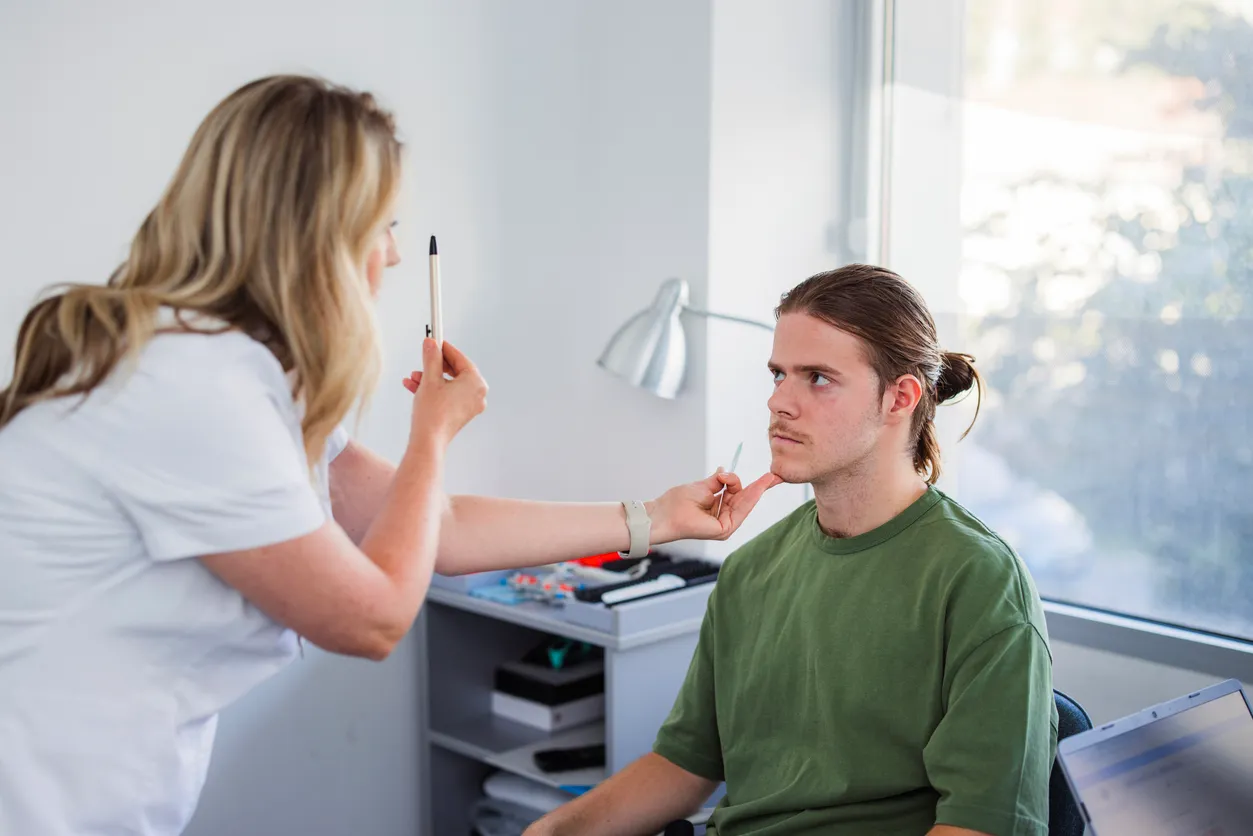
Your child's first visit is a binocular vision assessment, which typically runs 60-90 minutes. The optometrist evaluates how the eyes team, track, and focus together — beyond what a standard eye exam covers. Depending on the findings, a second assessment visit may follow to complete testing and build a personalized therapy plan, which we review with you before starting weekly sessions.
Who actually runs the vision therapy sessions — the optometrist or a therapist?
Your optometrist performs the initial binocular vision assessment and designs your personalized treatment plan. Ongoing weekly sessions are typically run by our trained vision therapist under the optometrist's supervision, with the optometrist reassessing progress at scheduled intervals throughout the program.
How soon will I see results from vision therapy?
Most patients notice initial improvements within the first several weeks, though full programs typically run 3–12 months depending on the diagnosis and how consistently home exercises are completed. Your optometrist reassesses progress at set intervals throughout the program and adjusts the plan as needed.
How is progress measured — how do you know when vision therapy is done?
Progress is tracked against specific, measurable goals set during your initial assessment — such as eye-teaming range, tracking accuracy, or symptom reduction. Your optometrist reassesses these benchmarks at regular intervals and will discuss when goals have been met and therapy can be tapered or completed.
What happens if we miss a session — does the program get extended?
Occasional missed sessions are normal and we'll work with you to reschedule; however, frequent gaps can slow progress and may extend the overall program length, since consistency is a key factor in outcomes.
Does vision therapy have side effects?
Vision therapy is non-invasive and generally very well tolerated. Some patients experience mild, temporary eye strain, fatigue, or headaches — similar to starting a new exercise routine — especially in the first few sessions, which typically resolves as the visual system adapts.
How much does vision therapy cost — per session and for a full program?
Vision therapy is billed per session, with full programs typically running several weeks to several months depending on the diagnosis. Ask our team for a personalized estimate after your assessment, or see our FAQ for how insurance and auto-insurance (HCAI) claims are handled.
Symptoms & conditions
What is convergence insufficiency and how do I know if my child has it?
Convergence insufficiency is a common eye-teaming disorder where the eyes struggle to turn inward and work together for close-up tasks like reading. Signs include eye strain, headaches, blurred or double vision with near work, difficulty concentrating on reading, and words appearing to move on the page. It's diagnosed through a binocular vision assessment — a standard eye exam alone often won't catch it, since visual acuity can be perfectly normal.
What happens if convergence insufficiency goes untreated?
Untreated convergence insufficiency often causes ongoing eye strain, headaches, blurred or double vision with near work, and avoidance of reading — symptoms that can affect school or work performance and are sometimes mistaken for attention or learning problems. It does not typically resolve on its own and tends to persist into adulthood without treatment.
My child reverses letters when reading — is that a vision problem?
Letter reversals are common and often developmentally normal up to about age 7–8. If reversals persist beyond that age, or are paired with other signs like headaches, losing their place while reading, or avoiding homework, it's worth a comprehensive binocular vision assessment to rule out an underlying eye-teaming or tracking issue — though reversals alone aren't a definitive sign of a vision problem and can also relate to typical reading development or learning differences like dyslexia.
My child gets headaches doing homework — could it be their eyes?
Yes, this is one of the more common signs of an uncorrected vision or eye-teaming problem, particularly convergence insufficiency, and is worth a comprehensive exam and binocular vision assessment to check. Headaches with near work can also have other causes, so it's worth raising with your child's optometrist and, if headaches are frequent or severe, their family doctor as well.
Also at TVTO
Related Services
Neuro-Optometric Rehabilitation
For post-concussion vision recovery
Comprehensive Eye Exams
Start with a full functional assessment
Myopia Control
For children with worsening nearsightedness
Lazy Eye Treatment
Binocular vision assessment and therapy for amblyopia
Convergence Insufficiency
Testing and therapy for eyes that struggle to work together



