Can Vision Therapy Help After a Concussion?
Headaches, blurred vision, and trouble reading after a concussion are often visual, not just cognitive. Here's how vision therapy helps.
Headaches, blurred vision, and trouble reading are common after a concussion — and often overlooked. Here's how vision therapy addresses the visual causes of post-concussion symptoms.
Most people expect a concussion to affect memory, mood, or concentration. Fewer expect it to affect their eyes. But the visual system uses a large share of the brain's processing power, and even a mild traumatic brain injury can disrupt how the eyes move, focus, and work together long after the initial injury has healed on a scan.
A 2021 study published in the journal Vision Research examined 113 adolescents 4 to 12 weeks after a concussion and found that 70% had at least one diagnosable oculomotor disorder — a problem with how the eyes move, converge, or focus. Vergence disorders, where the eyes struggle to team up for near work, showed up in 60% of the group. Accommodative disorders, where the eyes struggle to shift and hold focus, showed up in 57%. These aren't rare complications. For a lot of people, they're the norm.
Why concussions affect the eyes
Roughly half of the brain's neural pathways are involved in some part of vision — not just seeing clearly, but moving the eyes accurately, converging them for near tasks, and processing what they take in. A concussion doesn't have to strike the eyes directly to disrupt any of that. The forces that jar the brain during a concussion can affect the neural circuits that control eye movement and coordination in the same way they affect circuits involved in memory or balance.
That's why a person can have a completely normal eye exam after a concussion — clear vision, no visible eye injury — and still struggle to read a page, tolerate a bright room, or look at a screen for more than a few minutes.
Symptoms that point to a visual cause
Some of the most common post-concussion complaints are, at their root, visual:
Headaches that build over the course of a day, especially with reading or screen use. Blurred or doubled vision. Difficulty concentrating on written material despite no change in reading ability itself. Words that seem to swim or shift on the page. Dizziness or nausea in visually busy places like grocery stores or malls. Sensitivity to light. A general sense of visual fatigue that wasn't there before the injury.
Because these symptoms overlap so heavily with fatigue, anxiety, and the general disorientation that follows a concussion, the visual component often gets missed. A person is told to rest, limit screens, and wait it out — and some of the underlying problem never gets identified, let alone treated.
What vision therapy actually does
Vision therapy for concussion, sometimes called neuro-optometric rehabilitation, is a structured program directed by an optometrist that retrains the visual skills disrupted by the injury: eye teaming, focusing, tracking, and the visual processing that ties it all together. It isn't the same as waiting for symptoms to fade on their own, and it isn't generic eye exercises pulled from a worksheet.
The evidence for this approach has gotten considerably stronger in recent years. The CONCUSS trial, a randomized clinical trial funded through the National Eye Institute, followed 106 patients aged 11 to 25 with persistent post-concussion symptoms. After six weeks, 79% of the group receiving immediate office-based vergence and accommodative therapy showed improved convergence insufficiency symptoms, compared with just 13% in the group that received standard care and waited. Once the delayed group also received therapy, 81% of all participants were classified as treatment successes, and 95% showed some degree of improvement. The researchers were direct about the implication: spontaneous recovery from concussion-related convergence problems is uncommon, and waiting to treat it usually just prolongs the symptoms.
What a visual assessment after concussion involves
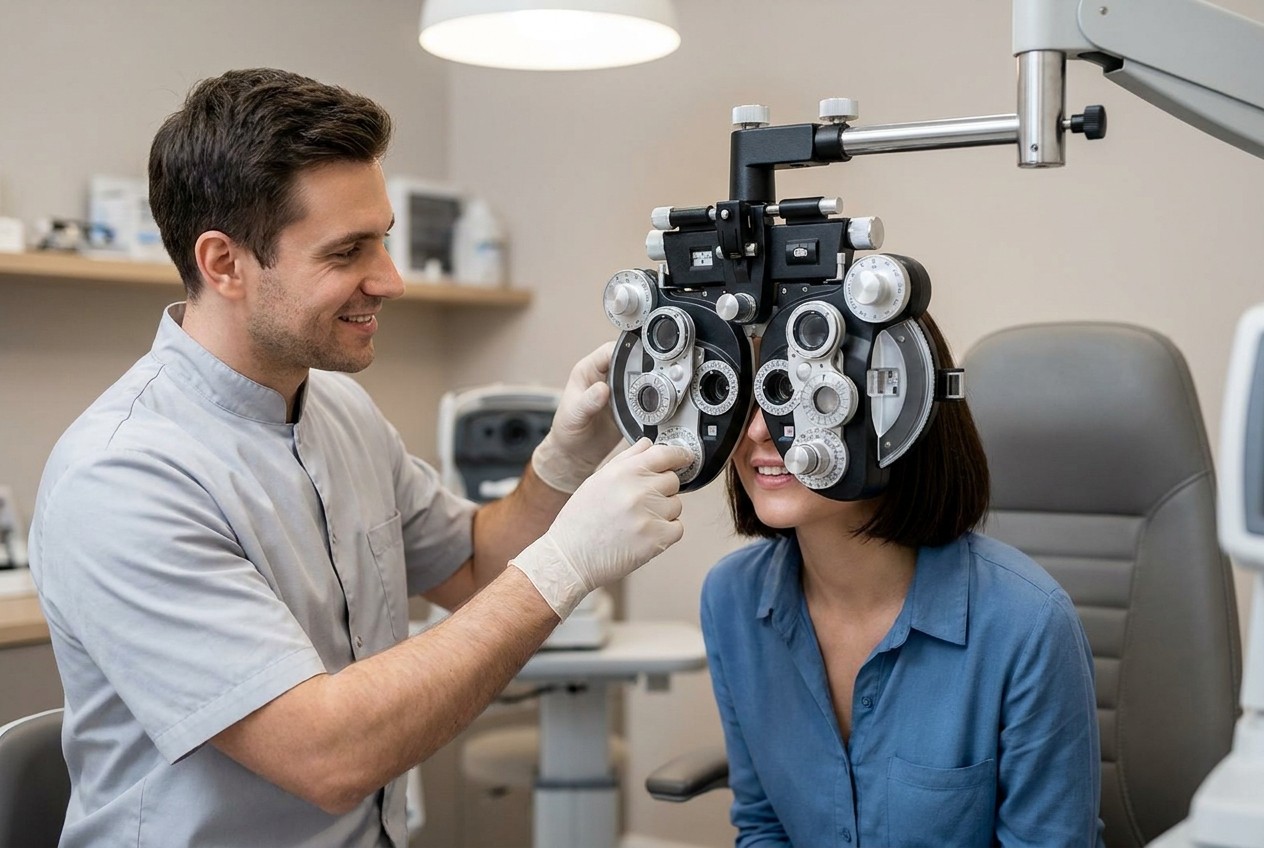
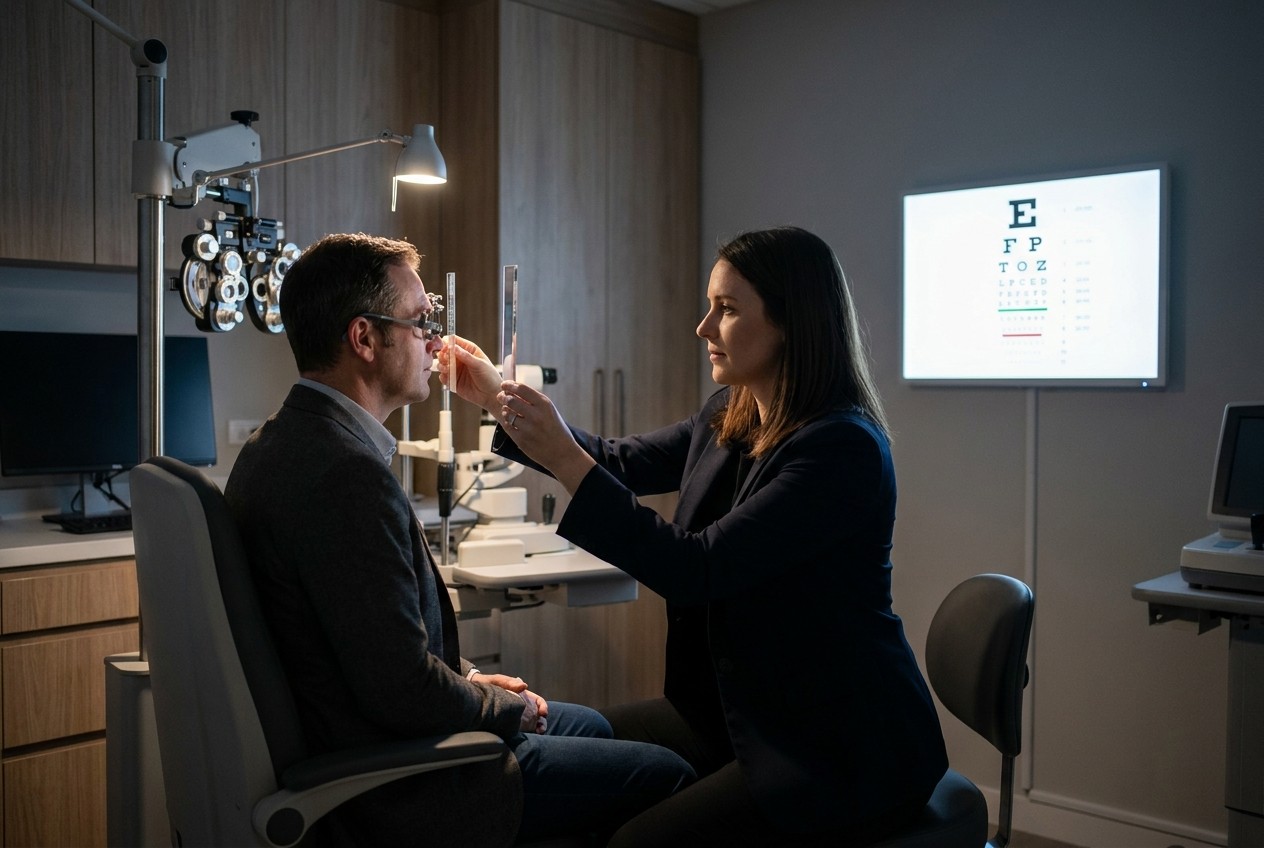
A neuro-visual evaluation after a concussion goes well past checking whether you can read the bottom line of an eye chart. It measures how well the eyes converge for near work, how efficiently the focusing system responds to changing distances, how accurately the eyes track across a page, and how well the two eyes work as a coordinated pair rather than two separate cameras.
This kind of assessment typically takes 60 to 90 minutes, considerably longer than a standard eye exam, because it's testing function under sustained use rather than clarity at a single moment. For many patients, it's the first time anyone has actually measured why reading, screens, or crowded spaces feel so much harder since the injury.
Who should consider it
Anyone with concussion symptoms that persist beyond the first couple of weeks is a reasonable candidate, particularly if the symptoms include headaches with near work, blurred or double vision, light sensitivity, dizziness, or difficulty concentrating on text. This applies whether the concussion happened on the field, in a car accident, or from a fall — the visual system doesn't distinguish between causes.
It's also worth knowing that a normal CT or MRI doesn't rule out a visual problem. Imaging looks for structural injury. Vision therapy addresses functional injury — a disruption in how the visual system operates, which typically won't show up on a scan at all.
What to expect if treatment is recommended
If the assessment identifies a visual coordination problem, most concussion-related vision therapy programs run 12 to 16 weeks, with one in-office session per week plus daily home exercises of 10 to 15 minutes. Sessions are typically shorter and more targeted than a standard pediatric vision therapy program, since the goal is restoring specific functions that were working normally before the injury rather than building skills from scratch.
Many patients are also receiving vestibular physiotherapy at the same time, and that's not a conflict — the two approaches address related but distinct systems, and combining them is increasingly the norm rather than the exception in concussion clinics. The optometrist and physiotherapist ideally coordinate, adjusting each program based on how the other is progressing.
On cost: vision therapy isn't covered by OHIP. If the concussion happened in a motor vehicle accident, treatment can often be funded through Ontario's auto insurance accident benefits system, and extended health plans frequently cover at least a portion of optometric vision therapy. It's worth confirming coverage specifics before starting, since plans vary considerably.
Getting assessed in North York
If you or your child had a concussion and are still dealing with headaches, blurred vision, light sensitivity, or reading difficulty weeks or months later, a neuro-visual evaluation is a reasonable next step, whether or not a doctor has already mentioned vision as a possible factor.
At Toronto Vision Therapy & Optometry in North York, we assess the full range of visual skills affected by concussion and build a treatment plan based on what the assessment actually finds — not a generic protocol applied to everyone.
Frequently asked questions
How soon after a concussion should I get a vision assessment?
There's no fixed window. If headaches, blurred vision, or reading difficulty haven't cleared up within two to three weeks of the injury, a neuro-visual evaluation is worth booking — and it's just as reasonable months or years later if the symptoms were never assessed.
Will a regular eye exam catch these problems?
Usually not. A standard eye exam measures visual acuity — how clearly you see — not how well the eyes converge, track, or sustain focus, which is where concussion-related deficits typically show up.
Is vision therapy covered by insurance?
OHIP doesn't cover it. If the concussion happened in a motor vehicle accident, auto insurance accident benefits often do, and many extended health plans cover at least a portion. Coverage varies, so it's worth confirming with your provider before starting.
Related reading
Post-Concussion Vision Syndrome Explained
How Neuro-Optometric Rehabilitation Works
What Happens During a Neuro-Visual Evaluation?
Neuro-Optometric Rehabilitation (service page)
Book a neuro-visual evaluation at tvto.ca/booking or call us at 416-498-3438.



Have questions about your child's vision?
Book a comprehensive eye exam or vision therapy consultation at our North York clinic.