
Myopia Control for Kids

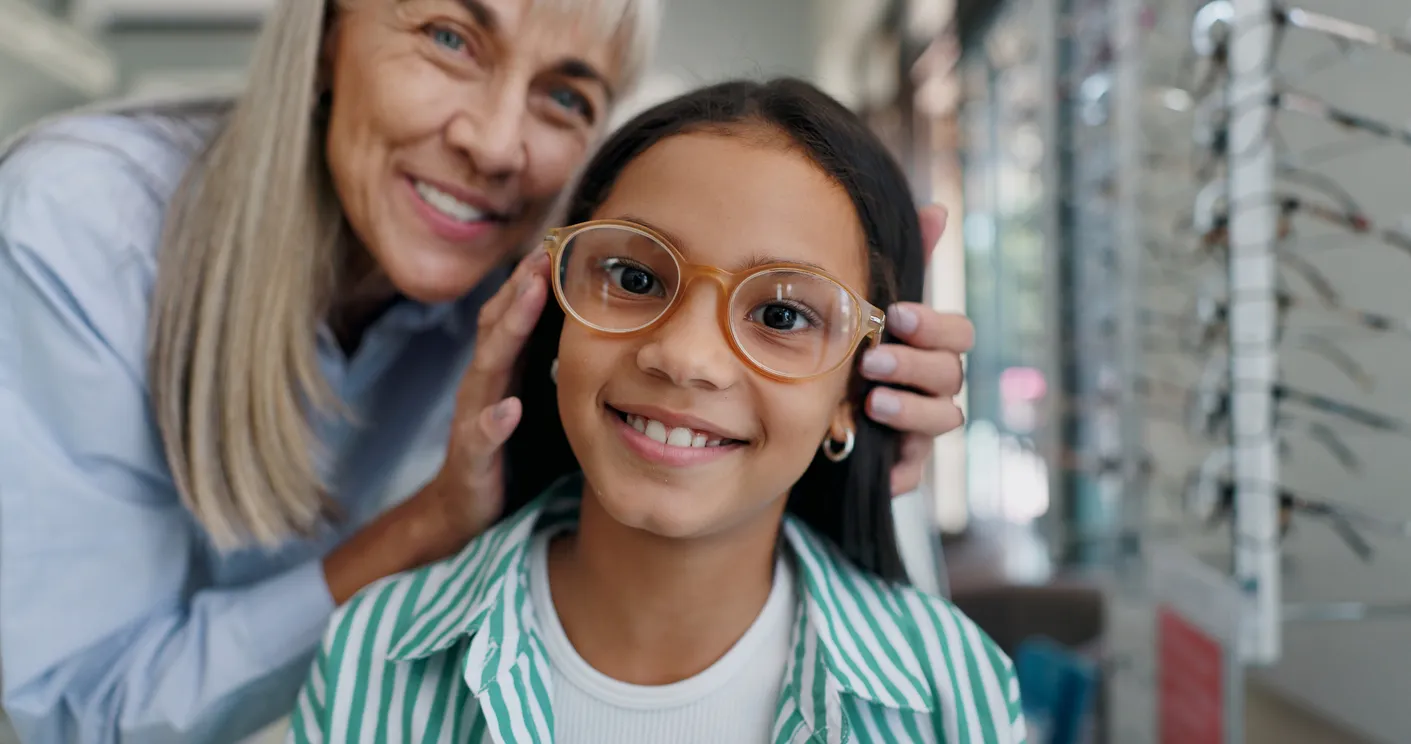
Slowing Myopia Progression with Care and Precision
We provide personalized Myopia Control solutions designed to protect long-term vision health. Our treatments combine science, comfort, and care to help children and young adults see clearly today — and in the future.
Families trust our specialists to deliver safe, effective, and compassionate myopia management. Through early detection and customized treatment plans, we reduce eye strain, prevent rapid prescription changes, and promote healthy visual development.
What You Need to Know About Myopia Control
Children ages 6–18 showing early signs of nearsightedness or with a family history of myopia.
Untreated myopia increases lifetime risk of retinal detachment, glaucoma, and vision loss.
MiSight daily lenses, Ortho-K overnight lenses, and Stellest spectacle lenses.
Axial length measurements every 6 months to track and adjust treatment.
Clinical studies show 50–67% reduction in myopia progression with consistent treatment, depending on the lens type.¹
Sources
¹ MiSight contact lenses — Chamberlain et al., Optometry and Vision Science, 2019: 59% less myopia progression vs. single-vision lenses over 3 years. Study. Ortho-K overnight lenses — Cho & Cheung, ROMIO Study, Investigative Ophthalmology & Visual Science, 2012. Study. Stellest spectacle lenses — Bao et al., JAMA Ophthalmology, 2022: 55% less progression on average, 67% among children wearing them 12+ hours/day. Study
Our Myopia Control Solutions


Myopia Control: Common Questions
Is my child too young, or too old, for myopia control?
Myopia control is most effective when started early — ideally between ages 6 and 12, when myopia tends to progress fastest — but it can benefit any child whose prescription is still worsening year over year, into the mid-teens. It's generally not recommended once a child's prescription has stabilized, which your optometrist can assess at your visit.
How much do MiSight and Stellest lenses cost?
Costs vary by product and whether contact lenses or spectacle lenses are chosen, and some cost may be offset by your eyeglass or contact lens insurance benefit. Ask our optical team for current pricing during your visit.
For details, read what affects the cost of Stellest lenses and ortho-k, and what insurance usually covers.
How soon will I see results from myopia control?
Myopia control doesn't reverse existing nearsightedness — it slows how quickly it progresses. We track effectiveness by measuring your child's prescription and axial eye length at regular follow-up visits, typically every 6 months, comparing progression to what would be expected without treatment.
Ortho-K vs. MiSight vs. Stellest — which is right for my child?
All three are clinically proven to slow myopia progression, and the right choice depends on your child's lifestyle, comfort with lenses, and prescription. Ortho-K lenses are worn overnight so your child needs no correction during the day; MiSight is a soft daily contact lens worn during waking hours; Stellest are glasses for children not ready for, or not suited to, contact lenses. Your optometrist can walk through the trade-offs for your child's specific situation at your visit.
What happens if myopia goes untreated?
Untreated, myopia typically continues to worsen through childhood and adolescence. Beyond needing stronger glasses over time, high myopia significantly raises the lifetime risk of serious eye conditions including retinal detachment, glaucoma, and myopic macular degeneration — which is the main reason we recommend early intervention.
Does treatment continue into adulthood, or can we stop once vision stabilizes?
Myopia control is typically continued through childhood and the teenage years, since that's when the eye is still growing and myopia is actively progressing. Once your child's prescription has stabilized — usually in the late teens — your optometrist will discuss whether to continue, transition to regular glasses or contacts, or consider other options.



