Many patients with irregular corneas, severe dry eyes, or a complex prescription hit a wall. Standard contact lenses either don't work or cause discomfort. They get told glasses are their only real option. But there's something most people don't realize exists: scleral lenses.
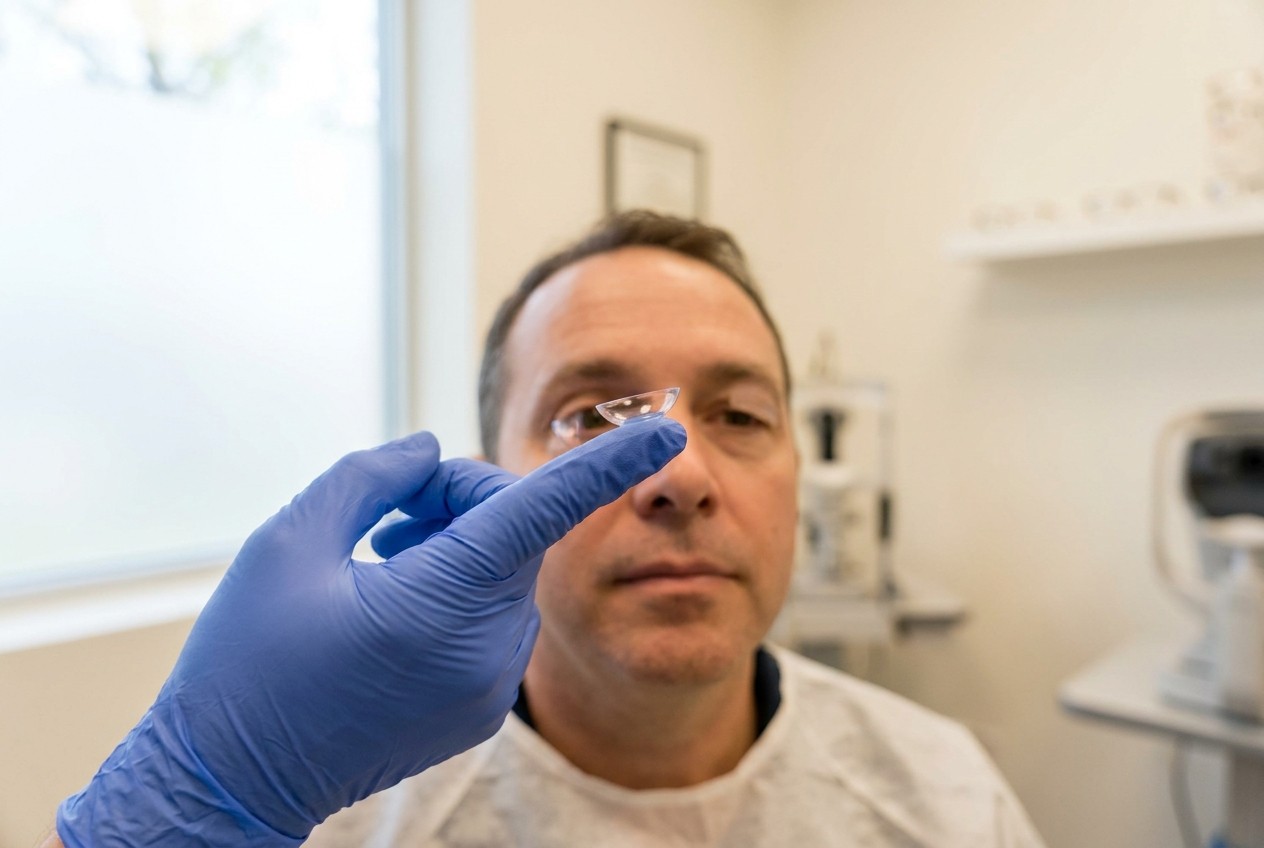
Most contacts sit on the cornea. Scleral lenses do something different. They're larger and rest on the sclera — the white part of your eye — and vault completely over the cornea without touching it. The space between the lens and cornea fills with sterile saline, basically creating a wet pocket for your cornea to sit in. That design choice changes everything.
Because they vault over the cornea instead of conforming to it, scleral lenses can correct problems that regular contacts can't. They're particularly good at handling eyes that are dry, scarred, or just fundamentally irregular in shape.
The typical candidates have one of a few specific conditions:
Keratoconus or scarring. A distorted cornea means standard contacts either don't fit properly or they hurt. Scleral lenses skip the cornea altogether, so the shape doesn't matter as much.
Severe dry eye. The saline reservoir keeps the cornea hydrated all day long. For patients with Sjögren's or graft-versus-host disease, this often makes the difference between tolerating contacts and not.
Complicated prescriptions. High myopia combined with astigmatism and an irregular cornea creates prescriptions that glasses or regular contacts can't handle cleanly. Scleral lenses can.
Post-LASIK problems. Corneal ectasia, irregular astigmatism, or an unexpected refractive shift after surgery often responds to scleral fitting when nothing else does.

Fitting takes longer than a standard contact fit. Your provider needs to measure your corneal curvature, the shape of your sclera, and how much vault you need so the lens clears the cornea without pressure. Most of this gets done with imaging technology now, not by trial and error.
Learning to put them in and take them out takes a few days or a couple of weeks. You insert the lens in a saline-filled holder, position it on your eye, and release it gently. Removal uses a small plunger to break the seal and lift it off.
Day-to-day care is simple: enzymatic or peroxide solutions designed for scleral lenses, clean them daily, soak overnight. A lot of patients find their lenses last longer than regular contacts because there's less overall friction.
If you've been told contact lenses won't work for your eyes, or if wearing them has always been a struggle, ask about sclerals. The learning curve is real and the fitting takes time. But the jump in clarity and comfort can actually be worth it.


Book a comprehensive eye exam or vision therapy consultation at our North York clinic.