Convergence insufficiency affects roughly 1 in 12 school-age children and is one of the most treatable causes of reading difficulty. Here's what it is, what it looks like, and what to do about it.
If your child struggles to read, the first things that come to mind are probably reading level, phonics, or attention. Vision rarely makes the list — especially if your child passed their last eye test.
But convergence insufficiency, a condition where the eyes can't maintain inward focus for near work, affects roughly 1 in 12 school-age children. It's one of the most common and most treatable causes of reading difficulty — and it's almost never caught by a standard eye exam or school vision screening.
When you look at something close — a book, a worksheet, a phone screen — your eyes turn slightly inward so both are pointing at the same target. That inward turn is convergence. The closer the object, the more the eyes need to converge.
In convergence insufficiency, the muscles responsible for that movement fatigue quickly or can't maintain the position needed for near work. The brain receives slightly different images from each eye. It either works hard to fuse those images (causing eye strain, headaches, and fatigue) or starts suppressing one eye's input (causing blurry vision or occasional double vision).
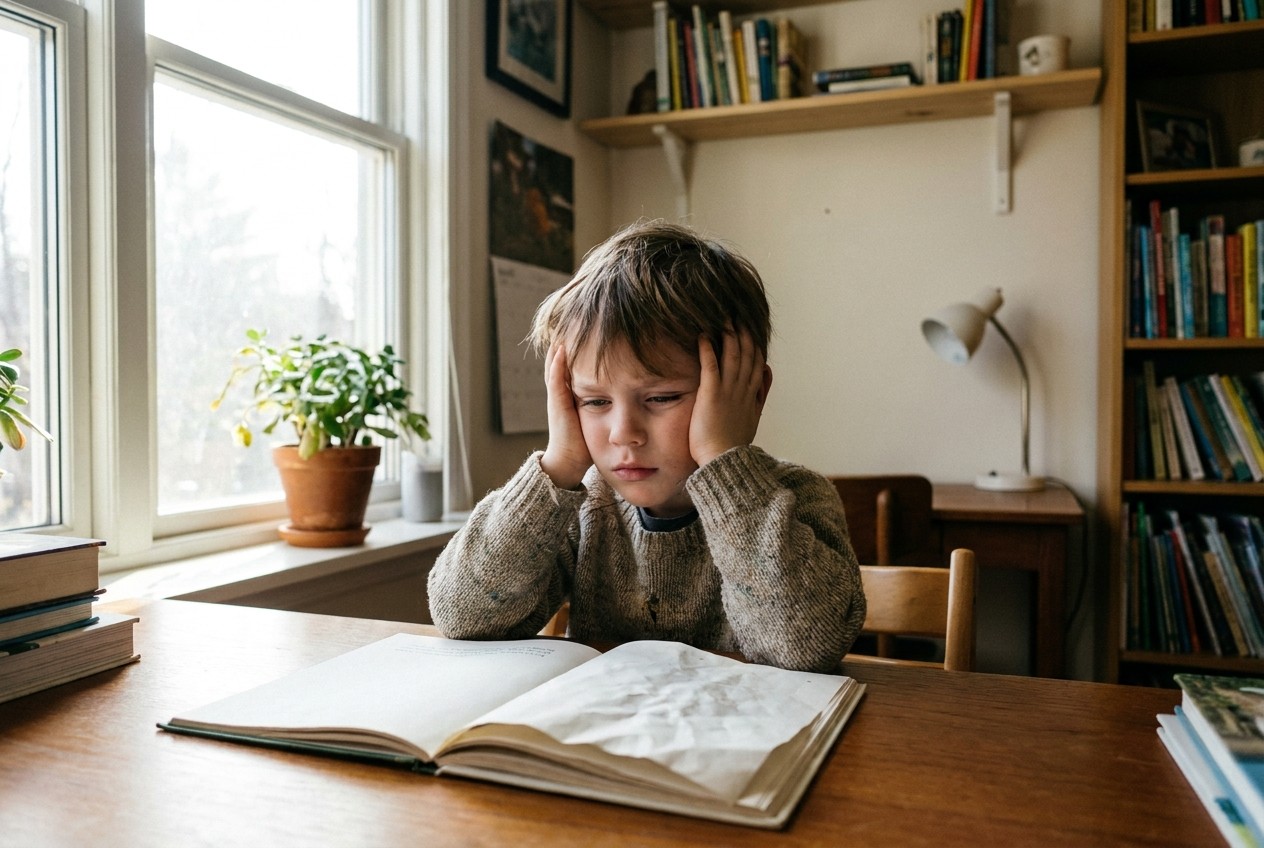
Reading is the worst-case scenario for a child with convergence insufficiency. A page of text at 30 centimetres requires sustained convergence for as long as the child is reading. That's a long time to hold a position that causes discomfort.
The classic symptoms of convergence insufficiency in children include:
What's notable is how closely these mirror ADHD symptoms. In fact, convergence insufficiency is three times more common in children with ADHD than in the general population, and research shows that children with both conditions have measurably lower reading comprehension than those with either condition alone.
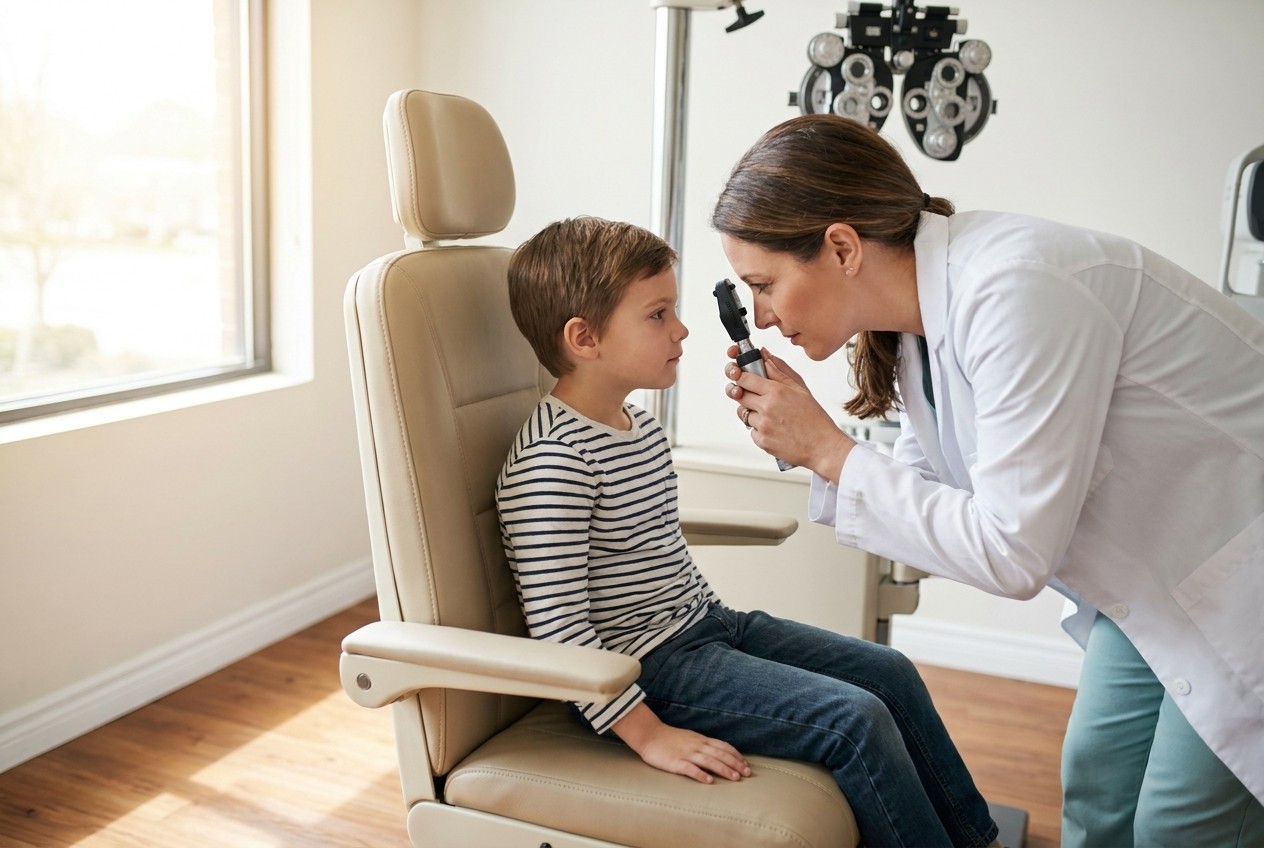
Standard eye exams don't test for convergence insufficiency. They test visual acuity — how sharply the eye sees at a standard fixed distance. A child can score 20/20 and have significant convergence insufficiency that the exam won't detect.
Even many school screenings that include a brief "near point" test don't go far enough. A proper assessment measures the convergence near point (how close an object gets before it appears doubled), the break and recovery points, and fusional vergence ranges. These numbers reveal how the eyes are actually performing under reading conditions, not just in a one-second chart test.
Office-based vision therapy is the evidence-based treatment. The 2008 Convergence Insufficiency Treatment Trial — a National Eye Institute-funded randomized controlled trial — found that 12 weeks of in-office vision therapy resolved symptoms in 73% of children, significantly outperforming home exercises alone, prism glasses, or placebo therapy.
Treatment typically involves weekly in-office sessions of 45 to 60 minutes, plus 15 to 20 minutes of home exercises each day. The exercises progressively challenge the convergence system, building both range and stamina of eye teaming over time. Most children complete treatment in 12 to 20 weeks.
Reading becomes less effortful. Children who previously couldn't stay focused on a page for more than a few minutes report that reading feels different — less tiring, less something to be avoided. Comprehension improves, because the mental resources previously spent managing eye strain are now available for understanding the text.
Academic performance often follows, though not always immediately. Children who have been avoiding reading for years need time to rebuild vocabulary and reading fluency. Vision therapy removes the barrier; rebuilding the skills that were missed still takes time.
If your child has reading difficulties, unexplained school struggles, or regular complaints of headaches and eye fatigue after schoolwork, a functional vision assessment is worth scheduling.
At Toronto Vision Therapy & Optometry in North York, we assess convergence and the full range of binocular vision skills to determine whether vision therapy is the right next step. Many of the children we see were told they "just needed glasses" — and the convergence problem was never identified.
Book an appointment at tvto.ca/booking or call us at 416-498-3438.



Book a comprehensive eye exam or vision therapy consultation at our North York clinic.