Binocular vision dysfunction affects how the two eyes coordinate — and its symptoms range from headaches and double vision to dizziness and discomfort in busy public spaces.
The visual system runs on a pair. Two eyes working together produce a single, stable, three-dimensional image. When that coordination breaks down, the brain works constantly to compensate — and that constant effort shows up as symptoms: headaches, eye strain, dizziness, difficulty reading, and discomfort in environments with a lot of visual activity.
This is binocular vision dysfunction (BVD). It's not a disease of the eye itself. It's a misalignment — usually small — in how the two eyes coordinate their movements and positions. The misalignment may be invisible on a standard eye exam. The symptoms it causes are not subtle.
Each eye captures a slightly different image of the world. The brain combines these two images into a single, three-dimensional perception — called binocular fusion. To maintain that fusion, the eye muscles make constant small adjustments to keep both eyes pointed at exactly the same target. In binocular vision dysfunction, the muscles pull in slightly different directions, and the brain spends significant resources compensating for it.
Convergence insufficiency: The eyes can't sustain inward focus for near work. Symptoms concentrate around reading, writing, and screen use. Convergence excess: The eyes over-converge, creating strain for distance viewing. Vertical heterophoria: A small vertical misalignment between the two eyes. This type often causes significant symptoms — including head tilting, dizziness, and anxiety in busy environments — despite being subtle enough to miss on standard testing. Intermittent exotropia: One eye drifts outward intermittently, especially when the person is tired or looking into the distance.
The range is wider than most people expect: headaches across the forehead or temples that worsen through the day; eye strain after reading or screen work; double vision (constant or intermittent); dizziness or a sense of being slightly off-balance; motion sickness in cars or on escalators; discomfort in large open spaces or busy environments; misjudging distances; tilting the head while reading; and anxiety or overwhelm in visually complex environments.
That last one surprises people. Anxiety in busy public places can have a visual component. When the visual system is working hard to maintain fusion in a cluttered environment, the brain can interpret the strain as threat. Some patients with vertical heterophoria report significant relief from what they previously described as social anxiety, after treatment addressed the underlying visual problem.
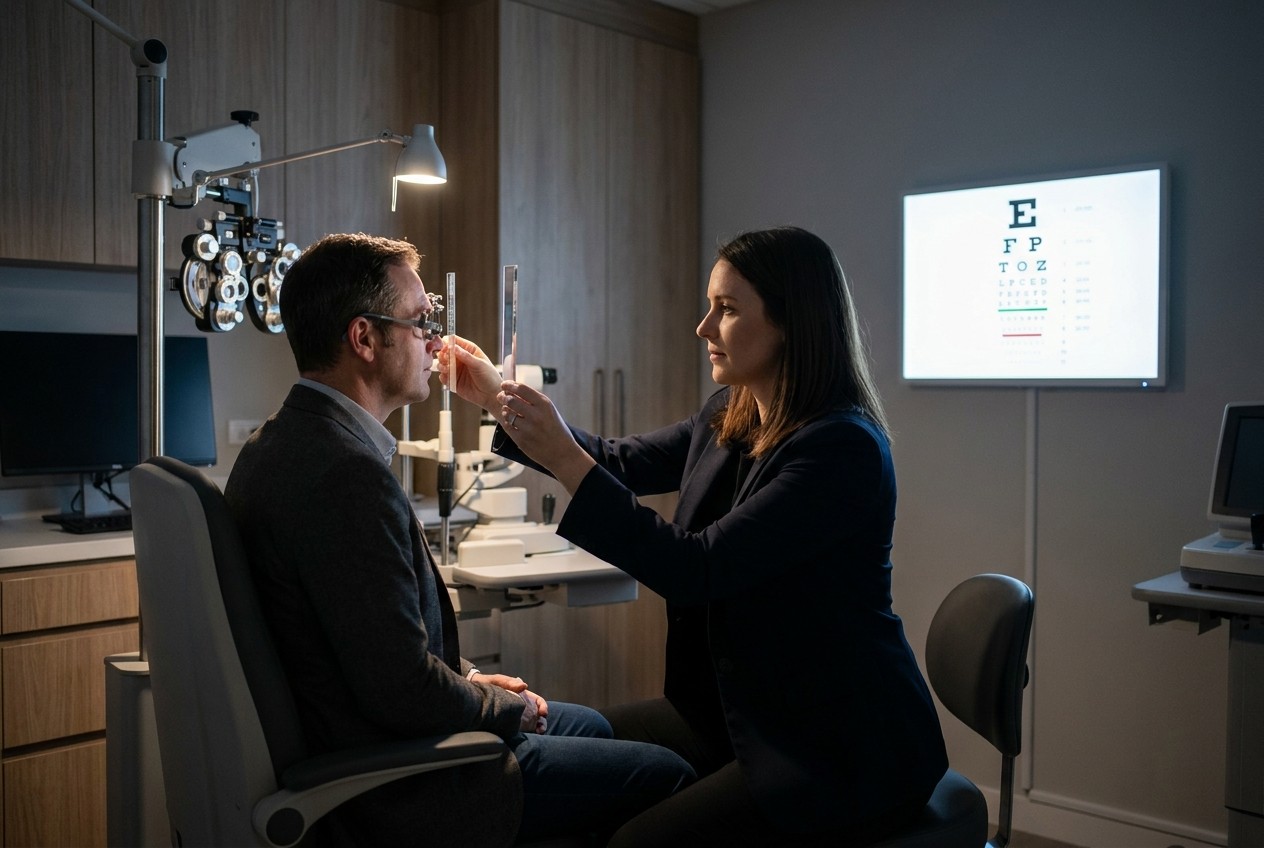
Most standard eye exams measure acuity and eye health. They don't measure fusional vergence ranges, vertical phoria, or sustained binocular performance under load. Measuring this requires specialized testing: cover tests, prism bars, stereopsis measurement, and assessment of fusional reserves under progressive load. These tests take time and aren't included in a routine 20-minute exam.
Prism lenses shift the image to account for the misalignment, reducing the fusion effort required. Vision therapy trains the eye muscles and the brain's ability to maintain fusion under real-world conditions. Many patients benefit from a combination of both.
At Toronto Vision Therapy & Optometry in North York, we assess the full range of binocular function as part of our neuro-visual evaluations. Book an appointment at tvto.ca/booking or call us at 416-498-3438.



Book a comprehensive eye exam or vision therapy consultation at our North York clinic.