Convergence insufficiency is three times more common in children with ADHD — and its symptoms look nearly identical. Here's how to tell the difference, and why it matters.
Before a child gets an ADHD diagnosis, it's worth ruling something out first.
Convergence insufficiency, a condition where the eyes can't sustain inward focus for near work, is three times more common in children with ADHD than in the general population. Its symptoms look almost identical to attention deficit: fidgeting during reading, difficulty staying on task, losing place constantly, poor reading comprehension, and avoidance of anything that requires close focus.
The difference matters. ADHD is a neurological condition that typically requires medication and behavioral support. Convergence insufficiency is a treatable vision problem with an 85% resolution rate through vision therapy. Getting the diagnosis wrong means years of unnecessary intervention — or no intervention at all when the right one exists.
The eyes need to turn slightly inward — to converge — to focus on anything close. Reading, writing, using a tablet: all of it requires sustained convergence. When the eye muscles responsible for this can't hold the position, the brain receives slightly conflicting signals from the two eyes.
The result is blurry text, intermittent double vision, and the mental effort of constantly working to fuse two slightly different images into one. Children don't describe it as "my eyes aren't converging properly." They say reading makes them tired. They say the words blur after a while. They say they'd rather do anything else.
ADHD affects attention, impulse control, and executive function. Convergence insufficiency affects the ability to sustain visual focus on near tasks. In practice, the behaviors look the same: the child squirms, gets up, loses interest, doesn't finish reading, acts out.
Research published in the journal Optometry and Vision Science found that children with both ADHD and convergence insufficiency have significantly lower reading comprehension than children with either condition alone. The two conditions compound each other. A 2024 clinical guideline from the American Optometric Association recommends that every child diagnosed with ADHD receive a binocular vision assessment to rule out convergence insufficiency before or alongside any treatment decision.
It's also worth knowing that some children have both conditions. They aren't mutually exclusive, and treating the vision problem doesn't necessarily resolve the ADHD — but it removes a layer of difficulty that was making everything harder.
Convergence insufficiency is the most studied, but it's not the only vision condition that mimics attention problems.
Binocular vision dysfunction, a broader category that includes problems with how the two eyes coordinate movements and positions, causes similar attention difficulties along with headaches, dizziness, and discomfort in busy visual environments. Accommodative dysfunction, where the eye's focusing muscle fatigues quickly under near-work load, makes sustained reading feel genuinely impossible rather than merely difficult. Both conditions respond to vision therapy.
A standard eye exam tests acuity. It doesn't test convergence, eye teaming, or how long the eyes can sustain focus under sustained load.
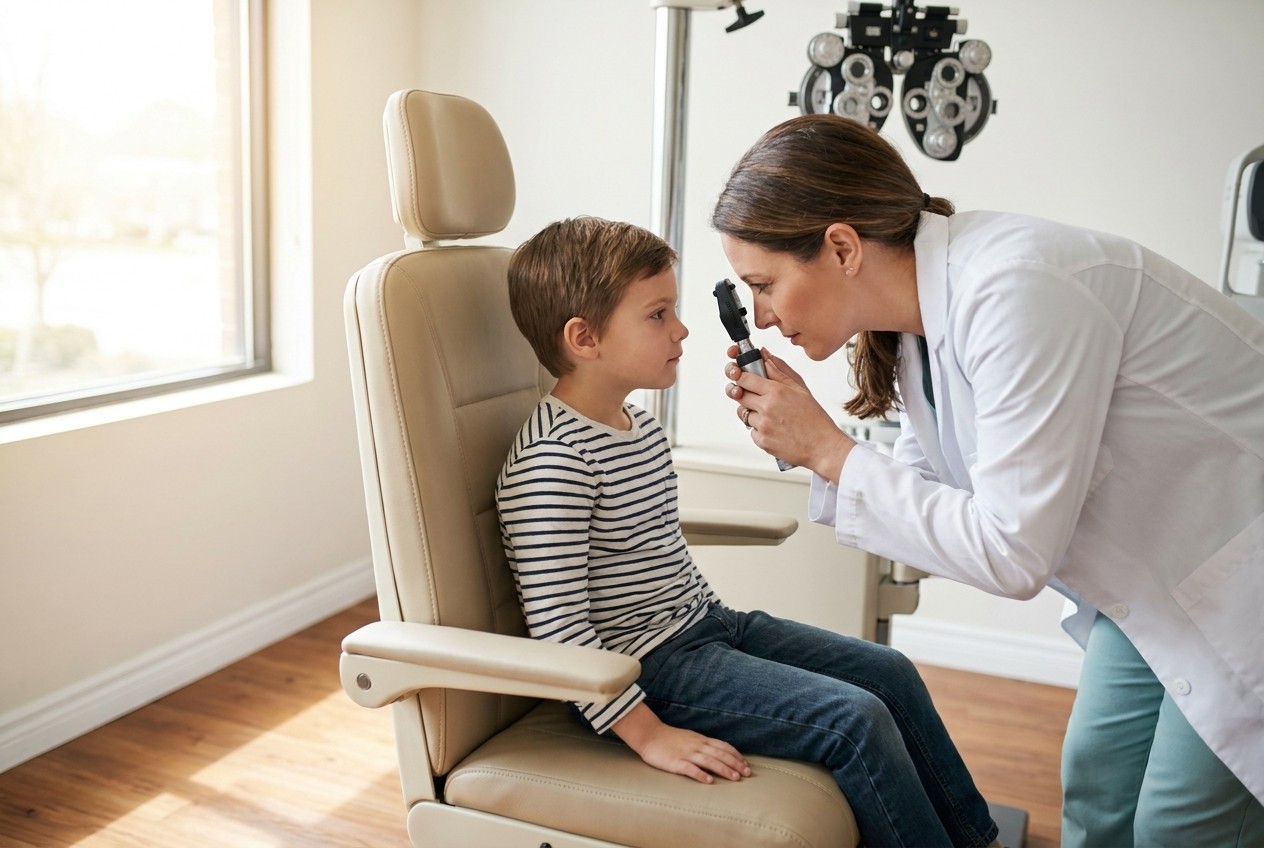
A functional vision assessment or neuro-visual evaluation does. The optometrist measures the convergence near point (how close an object gets before it appears doubled), accommodative amplitude (how much focusing power is available and how quickly it fatigues), and saccadic eye movements (how accurately the eyes track across a line of text). These numbers give a much more complete picture of why a child can't sit still through a reading session.
If your child has been diagnosed with ADHD and is still struggling despite appropriate treatment, or if ADHD is a possibility and you haven't yet decided on a path forward, a functional vision assessment is a reasonable first step. It's non-invasive, takes about an hour, and will either rule vision out as a contributing factor or identify a treatable problem.
At Toronto Vision Therapy & Optometry in North York, we see a significant number of children referred with suspected ADHD who are found to have treatable binocular vision conditions. That doesn't mean ADHD is the wrong diagnosis for every struggling child. It means vision is worth checking before drawing conclusions.
Book a functional vision assessment at tvto.ca/booking or call us at 416-498-3438.



Book a comprehensive eye exam or vision therapy consultation at our North York clinic.